
Restoration returns a feature to how it looked at a particular time, often its original appearance. Rehabilitation repairs a house and adapts it for modern life while keeping the features that give it its character. Remodeling changes the house. Most Austin homeowners with an older house need careful rehabilitation: a kitchen that works, but original windows, trim and porch kept and repaired.
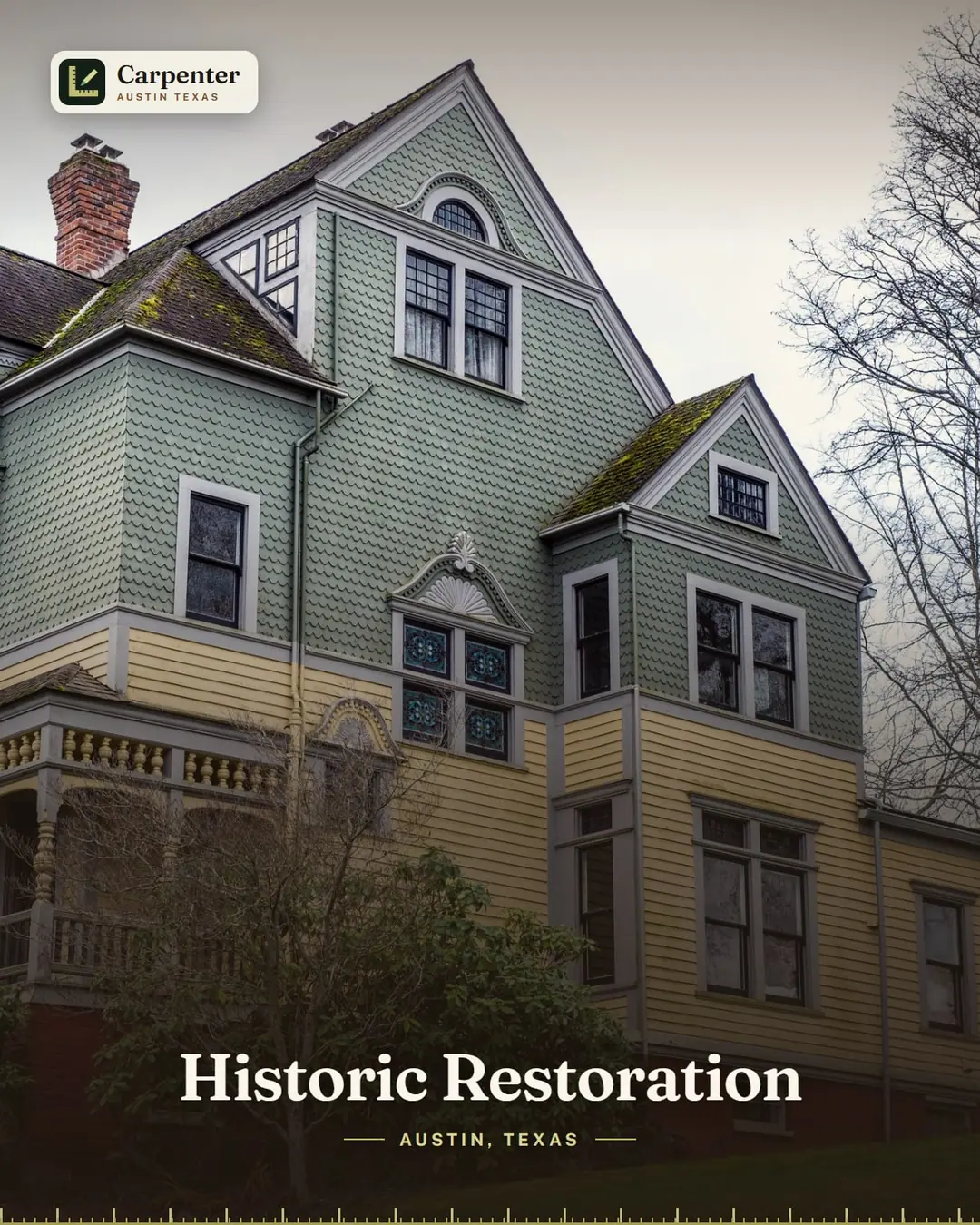
Structural, repair and remodeling · Austin, TX
Historic home restoration carpentry in Austin, TX
You own an older Austin house. It still has its original wood windows, tall baseboards and wide casings, and a porch with turned posts. What worries you is that a regular contractor will look at all of it and suggest tearing it out.
Read more
Carpenter Austin Texas does historic carpentry and old house restoration in Austin. That means repairing and matching original millwork, porches, windows, siding and structure, so the house keeps its character after the work is done. Historic home restoration is slow, careful carpentry. Our owner's rule fits it well: wood "should be cut, fitted, and finished like it's meant to last a lifetime." We take on jobs of every size, starting from a single rotted porch post on a 1920s bungalow.
Every estimate is free and written, and it notes where Austin's historic review may apply to the work. If you're still comparing local carpenters in Austin, start with a walkthrough.
We'll look at what's original, what's repairable and what review your project may need, then give you a written estimate. We show up on time, protect your home, and clean up carefully.
- Free written estimateYou know the scope and the price before anyone picks up a saw.
- On time, as promisedWe show up on the day and at the time we agreed.
- Your home protectedFloors, furniture and the yard are covered while the work goes on.
- Clean job siteThe work area is swept and cleared before we leave.
- Built for Texas weatherLumber, fasteners and finishes chosen to hold up to Austin heat, storms and clay.
- Jobs of every sizeOne rotted porch post gets the same care as a custom build.
The numbers behind this work
- ~700historic landmarks in AustinAustin has nearly 700 designated historic landmarks, 8 local historic districts and 18 National Register districts, and exterior work on many of them goes through historic review.City of Austin Historic Preservation · 2026
- 45 yrsbuilding age that brings historic reviewDemolishing or relocating any Austin building 45 years or older that could qualify as a landmark goes to the Historic Landmark Commission first.City of Austin Historic Preservation · 2026
- 10,782Austin homes built before 1940Austin still has 10,782 housing units built in 1939 or earlier, most of them wood-framed with porches, sills and floors that have carried a century of Texas weather.U.S. Census, ACS 2024 · 2024
- 2000median year Austin homes were builtThe median home in Austin was built in 2000, so half of the city's housing stock is now more than 25 years old.U.S. Census, ACS 2024 · 2024
01Good to know
What historic restoration carpentry means
In short
Historic carpentry covers three kinds of work, and the words get mixed up a lot.
Our working principles follow the Secretary of the Interior's Standards for Rehabilitation, published by the National Park Service
- Try repair before replacement. A repaired original piece keeps material that can't be bought new.
- When a piece has to be replaced, match it in kind: same material, same profile, same dimensions.
- Keep the character-defining features, such as windows, porches, trim, siding and doors.
- Avoid changes that can't be undone later.
None of this is legal advice
It's how we decide, board by board, what to keep.
Old-growth wood is worth saving for its own sake
Lumber in many early houses came from slow-grown trees with tight growth rings and dense heartwood. It resists rot and holds its shape better than most fast-grown lumber sold today, so a repaired original board can outlast a new one.
Reversible repairs leave options for the next owner
A fitted patch in a sill, a new joist bolted beside an old one, or a storm window set in front of an old sash can all be undone later without destroying original material. That is what avoiding irreversible changes means in practice.
Recording a feature is part of the work, not paperwork
Photos and measurements taken before anything is removed show how a feature was built, which matters if a piece breaks during repair or has to be copied later.
02What we do
Austin's historic neighborhoods and house styles
In short
Austin has a large stock of older homes. Which rules apply to yours depends on its status. It may be a city landmark, sit in a local historic district or a National Register district, or simply be more than 45 years old.


The City of Austin lists eight local historic districts:
- Aldridge Place
- Castle Hill
- Harthan Street
- Hyde Park
- Mary Street
- Robertson/Stuart & Mair
- Rogers-Washington-Holy Cross
- Smoot/Terrace Park
New districts get added from time to time, so check the City's current list. Separately, individual buildings can be designated as city landmarks.
Inside a district, each property is either contributing or noncontributing. According to the City, a contributing property is at least 50 years old and keeps a high degree of integrity. A noncontributing property is younger, was built outside the district's period of significance, or has lost too much integrity. The rules for exterior changes are much stricter for contributing properties. You can check your property's status in the City's Historic Property Viewer.
If your property is contributing, read your district's design standards before planning exterior work. They set out what is expected for exterior changes, and knowing them early lets you shape a project that fits instead of redesigning after a review.
According to the City, properties in 18 National Register historic districts in Austin are subject to advisory historic review. They include the Old West Austin Historic District (listed in 2003), the Travis Heights-Fairview Park Historic District (listed July 30, 2021), and the Hyde Park and Shadow Lawn districts (both listed in 1990). The Clarksville Historic District was listed in 1976.
For the owner, National Register listing is mostly honorific. In Austin, though, it carries one practical rule. Applications for building and demolition permits in National Register districts go to the Historic Landmark Commission, which holds a public hearing on them.
District boundaries follow specific lots and streets, so a house just outside a boundary can fall under different rules from its neighbor across the street. Check the exact boundary for your address rather than going by the neighborhood name.
A restoration carpenter in Austin sees three broad families of houses, each with its own woodwork.
Victorian and folk Victorian houses have turned porch posts, spindlework, tall windows and decorative gables. Their millwork is often the most detailed on the street.
Craftsman bungalows have tapered porch columns on piers, exposed rafter tails, wide flat casings and drop siding. Bungalow restoration in Austin usually centers on those porches and eaves, where water has had a century to work on the wood.
Cottages from the 1930s to the 1950s, including minimal traditional houses, have simpler trim. Most still have their original wood windows.
Each style tends to fail in its own places. Victorian spindlework and brackets trap water in their joints, Craftsman tapered columns usually rot first at the base where they meet the pier, and cottage windows suffer most at the bottom rail and sill.
How to learn your house's history
Start with the City's Historic Property Viewer to see whether your house is a landmark or sits in a district, and whether it is listed as contributing. That status decides which review rules apply before any exterior work begins.
Then look at the house itself for clues. The type of nails, saw marks on attic framing, the casing profiles and the kind of siding all point to a period, and they show which parts are original and which came later.
Old photos help with missing features. Previous owners, neighbors, old real estate listings and local archives can turn up pictures of your porch or windows as they once were, which gives any replacement part something real to follow.

Wood should be cut, fitted, and finished like it’s meant to last a lifetime.
03What we do
Historic review, permits and incentives in Austin
In short
Knowing what needs review before you start can save months. We plan repairs around the design standards that apply to your house, and approval decisions rest with the City.


These are the City of Austin's rules as published on its historic preservation pages.
Property type Review needed for Usually exempt Contributing property in a local historic district Exterior site and building changes, reviewed by the Historic Preservation Office or the Historic Landmark Commission, to that district's design standards Routine maintenance and in-kind repairs City landmark Exterior changes; the Historic Landmark Commission reviews certificates of appropriateness for landmarks Routine maintenance and in-kind repairs Contributing property in a National Register district Exterior alterations; building and demolition permits go to the Historic Landmark Commission Routine maintenance and in-kind repairs Not designated, more than 45 years old Exterior changes, relocation and demolition, reviewed by the Historic Preservation Office, which may refer the case to the Commission Work that needs none of those applications Applications go through the City's online Austin Build + Connect system. Per the City, most smaller projects can be approved by staff within 5 business days, while larger ones go to the Historic Landmark Commission, which meets monthly.
Interior work generally sits outside exterior review, but an interior plan that changes the outside, such as moving a window or adding a skylight on a street-facing roof, becomes an exterior change. Check those items before the design is settled.
Austin's historic design standards favor keeping and repairing existing buildings. In practice, the character-defining features of an older house usually include exterior wall materials, windows and screens, doors and entries, roof form, porches, chimneys, railings and trim.
In-kind repair means fixing something with the same material, the same profile and the same size as the original. A new section of drop siding, milled to the old profile and painted, is in kind. Swapping wood siding for fiber cement is not.
If you're unsure which side of that line your project falls on, contact the City's Historic Preservation Office early, before you've committed to a design.
In kind covers more than the visible face. A matched siding board nailed at the wrong spacing, or a column turned from a different wood, can still look new once it weathers, so species, fastening and paint are matched as well as the profile.
The City of Austin offers a tax abatement for rehabilitating a contributing property in a local historic district. Some noncontributing properties can qualify under certain conditions. The abatement applies to City property taxes on the value the rehabilitation adds, and the work has to meet the district's design standards.
City landmark owners can receive an annual partial property tax exemption. According to the City, owners file for it with the Travis Central Appraisal District by April 30 each year. Check the City's historic preservation resources page for current terms.
Keep records of rehabilitation costs and before and after photos as the work goes. Programs tied to the value a rehabilitation adds are easier to apply for when the work is documented as it happens rather than pieced together afterwards.
Getting ready for a review application
Photograph the existing condition from the street and up close before anything changes. Reviewers judge a proposal against what is there now, and clear photos of the current feature, its damage and its surroundings make a request easier to understand.
Describe materials and sizes precisely. A note that new porch columns will be wood, turned to the existing profile at the same height and diameter, tells a reviewer far more than a line saying the columns will be replaced. Profile drawings or samples help where the change is visible.
Split reviewed and unreviewed work. Routine maintenance and in-kind repairs can go ahead while items that need approval wait, so one decision does not hold up the whole job.
04What we do
Our historic restoration carpentry services
In short
The two sections below cover the work this page is mainly about: matching historic millwork and restoring historic porches. After them come shorter notes on windows, siding, doors and structure, with links to the pages that cover those in depth.


Historic millwork in Austin covers more than trim. It includes casings, baseboards, crown and picture rail, door and window trim, porch brackets, corbels, gable ornaments and stair parts.
Matching it starts with documentation. We take a sample or trace the profile with a profile gauge, then record it in drawings and photos. There are two ways to reproduce a profile: build it up from stock moldings, or run new molding with knives ground to match. Where the trim will be stained, we match the wood species and grain. Painted trim gets primed and painted like the original.
We try repair first. Original pieces with local damage get a dutchman (a fitted patch of new wood), a consolidant to harden soft fibers, or a splice. During other work, we take off original trim carefully, label it, and put it back.
If you want new built-ins in a period style, that's a custom woodwork in Austin project.
Bring out any loose or broken trim you have saved in the garage or attic. Even a short length of original casing or a single bracket shows the full profile and species, and it is often better evidence than a worn piece still on the wall.
Historic porch restoration in Austin deals with a familiar set of parts: tongue-and-groove floors, turned or tapered columns, balusters and spindlework, beadboard ceilings, brackets and steps.
We document first. Every original part gets photographed and measured, and then we stabilize the porch and shore the roof where columns or beams are coming out. Original parts get repaired: column bases spliced, soft wood consolidated, and only the failed pieces replaced. Missing parts are replicated in kind, from surviving pieces or old photos.
Some changes to a street-facing historic porch are likely to need review. Enclosing it is one. So are changing the column or railing style, or replacing a wood floor with another material.
Safety sometimes forces a question. An old porch may have a railing lower than current rules allow, or none at all. When a new guard is needed, we talk through options that keep the look of the porch, and check them against the code and the design standards.
For a new porch or general porch repair on a home that isn't historic, see our page on porch building and repair.
Porch floors last longer when water can leave them. Tongue-and-groove porch boards are laid with a slight slope away from the house and painted or sealed on every side, including the end grain, before they go down.
Original windows are often the most visible original feature on a historic facade, and they're the first thing many contractors want to replace. Restoration keeps them working: reglazing, new sash cords, rot repair, weatherstripping and storm windows. Our page on historic window restoration in Austin explains the process.
If drafts are the main complaint, look at the weatherstripping, sash fit and glazing putty before deciding the windows have failed. Air leaks around old windows usually come from loose sash and worn seals rather than from the glass.
We repair original drop siding, corner boards, cornices, gable shingles and exposed rafter tails in kind. That means matching the profile, the exposure and the species. A repaired section should disappear into the wall once it's painted, and in-kind work like this generally doesn't need historic review.
A single rotted siding board can usually be cut out between joints and a matched board slipped into the lap without disturbing its neighbors. The new board is primed on all faces first so it does not draw moisture in through the back.
Inside, we repair original panel doors and transoms, staircases with their newels and balusters, built-ins and wainscoting. As old houses settle, doors drop out of square and bind. We re-hang them so they swing and latch again, keeping the original door and hardware wherever we can.
Before a sticking door is planed, the cause is checked. A door that rubs at the top latch corner often has loose hinge screws or a sagging frame, and tightening or shimming the hinges can fix it without cutting away original wood.
Sill and joist rot, termite damage and pier-and-beam settling are common under older Austin homes. They get fixed before any cosmetic work, because new trim on a moving frame cracks again. Structural carpentry follows our standard carpentry repair in Austin process, with extra care to keep original framing and finishes wherever they're sound. Foundation leveling is a separate trade, and we work around it.
Sistering, which means fastening a new joist beside a damaged one, often beats pulling the old joist out. It keeps original framing in place and avoids disturbing plaster ceilings or old floors that the joist carries.
What sits behind a lasting repair
Rot is almost always a water problem first. Before a repair is planned, the source is found: failed paint, a joint that holds water, an overflowing gutter or soil piled against wood. Fixing the board without fixing the water means doing the job again.
Matching starts under the paint. Decades of paint layers soften a profile's crisp edges, so a sample is cleaned back before it is traced. Matching the profile buried under the paint, not the rounded painted one, is what makes a new piece sit right beside the old.
Salvage pays off. Sound original pieces from a hidden wall or a later addition can repair the visible ones, and keeping a small stock of original trim and siding gives future repairs a perfect match.
05Side by side
Repair or replace in an old house?
The short answer
Old house restoration means making one decision over and over: keep this piece, or replace it. These five questions decide it.
| Question | Points to repair | Points to replace |
|---|---|---|
| How much original material is still sound? | Most of it | Little or none |
| Is it character-defining and visible? | Yes, on a street-facing wall or main room | No, or it's hidden |
| Does historic review apply? | Yes, in-kind repair avoids review | No designation, or the piece isn't original |
| What does it cost over time? | Repair plus upkeep beats buying a lesser replacement | Repair would cost more than an equal-quality new piece |
| What are your goals? | Keep the original look | Lowest upkeep matters most |
How to test what you have
Probe the wood. Push an awl into suspect spots at the bottoms of posts, sills, window rails and siding ends. If the tip sinks in easily or the wood crumbles, the damage is real. If it only dents, the piece is likely sound under failed paint.
Look at how far the damage runs. A rotted end on an otherwise sound board, a column with a soft base or a single cracked pane are local repairs. Damage that runs through most of a piece, or has spread into the framing behind it, moves the decision toward replacement in kind.
Be honest about upkeep. A restored wood window or porch needs paint and putty on a regular cycle, and that care is part of the choice. If you know you will not keep up with it, say so before the scope is written.
Our take
Some elements really are past repair. And some features don't need saving at all, such as later replacement windows or aluminum siding added decades after the house was built. When new windows are the honest answer, see window installation in Austin.
06Rules & permits
Lead paint and other old-house hazards
In short
Paint is the big one. EPA's Renovation, Repair and Painting (RRP) rule requires anyone paid to disturb painted surfaces in homes built before 1978 to be certified and trained in lead-safe work practices. EPA says about three-quarters of US homes built before 1978 still contain some lead-based paint.

Lead-safe work means containing the work area, keeping dust down, and specialized cleaning afterward, then checking that the cleaning worked. The rule bans open-flame burning or torching of painted surfaces. It allows paint-removal machines like sanders only with shrouds and HEPA vacuum attachments, and heat guns only below 1,100 degrees Fahrenheit.
Asbestos can turn up in some older siding, flooring and insulation
Suspect material gets tested before anyone disturbs it, and a licensed abatement contractor removes it where needed.
Knob-and-tube wiring found behind old walls goes to a licensed electrician.
Small jobs are not automatically outside the rule
The RRP rule's minor repair exemption covers disturbing up to 6 square feet of painted surface inside or 20 square feet outside. Window replacement is covered whatever the area.
Keep young children and pregnant family members away from the work
Lead dust does the most harm to young children and unborn babies, and it settles on floors and window sills where small hands find it. Plan where they will be while paint is disturbed.
Ask about the cleaning check at the end
After lead-safe work, surfaces are cleaned and then checked to confirm the cleaning worked. Ask how that check is done in your house before anyone moves back into the room.
07How it works
Our historic restoration process
In short
Seven stages run from a walkthrough to finished work, and nothing original is removed before it has been recorded.
- Step 01
Consultation and walkthrough of the house with you
The walkthrough starts with what you care about: a sagging porch, windows that will not open, trim damaged by an old leak, or a plan to restore the street face of the house. The carpenter looks at the house as a whole, noting which features appear original, which were changed later and where water has been getting in.
Bring what you know about the house: its age, old photos, past permits and any pieces of trim or hardware stored in the garage or attic. Say early if you know or suspect the house is a landmark or in a historic district, or if you are thinking about a tax abatement, since both shape how the work is planned and recorded.
What to expect You walk the house with us, point out the features you want kept or fixed, and share any photos, records or saved pieces.
- Step 02
Documentation
photos, measurements, profile drawings, and notes on what's original.
Before anything is removed, each feature in the scope is photographed and measured. Profiles of casings, baseboards, brackets and siding are traced or drawn, and notes record the species, joinery, fasteners and paint condition. Pieces that come off are labelled so they go back exactly where they came from.
This record does several jobs. It guides replication of missing parts, it shows reviewers the existing condition, and it gives you a history of the house that future owners will value. If something unexpected breaks during repair, the drawings and photos mean it can still be rebuilt accurately, down to the reveal and the nail pattern.
What to expect You see photos, measurements and profile tracings taken of each feature before anything is taken apart.
- Step 03
A condition assessment and a repair-first scope of work
The condition assessment sorts each piece into sound, repairable or past repair. Wood is probed for rot, joints are checked for movement, and paint failure is traced back to its cause, whether a leak, a missing drip edge or soil against the wood. Structural problems under the house come first, because they affect everything above them.
The scope is written repair-first. It says which parts are repaired, which are replicated in kind and which, if any, are replaced, and why. You set priorities here, such as stopping water and fixing structure now and leaving visible restoration for a later phase if the budget needs it.
What to expect You go through the assessment with us and decide which items to do now and which can wait for a later phase.
- Step 04
A review check
if your project needs approval from the Historic Preservation Office or the Commission, work on those items waits until approval is in hand.
Each item in the scope is checked against the house's status. Routine maintenance and in-kind repairs do not need historic review, but exterior changes to landmarks, contributing district properties and some older undesignated houses do. Items that need approval are separated from those that do not.
Applications go through the City's online system. Most smaller projects can be approved by staff, while larger ones go to the Historic Landmark Commission. Work that needs no approval can go ahead while reviewed items wait. Your choice here is whether to adjust a design to fit the standards, which can keep the review simpler, or to seek approval for the change as planned.
What to expect You learn which items need City approval and decide how to handle each one, while in-kind repairs can move ahead.
- Step 05
Protection of the house and a lead-safe setup where paint will be disturbed
Old houses need careful protection because the finishes being protected are often original too. Floors, stair treads and built-ins near the work are covered, and furniture is moved or wrapped. Where paint will be disturbed, the work area is sealed with plastic sheeting, and outside the ground below is covered to catch chips and dust.
Lead-safe setup treats paint in an older house as if it may contain lead unless testing shows otherwise. Signs mark the work area, and people and pets stay out until cleaning and the cleaning check are done. Tell us about young children, pregnant family members and vegetable gardens near the house, since they affect where containment goes.
What to expect You clear the rooms, keep family and pets out of the marked area, and see containment set up before paint is touched.
- Step 06
The work itself
stabilize, repair in kind, and replicate missing pieces.
Stabilizing comes first: a porch roof is shored before a column comes out, and rotted sills or joists are repaired before trim goes back on a moving frame. Then repairs are made in kind, with patches, splices and replacement parts in matching species and profile, keeping as much original material as each piece allows.
Missing parts are replicated from surviving pieces, profile drawings or old photos. When a hidden condition turns up, such as termite damage behind siding, it is shown to you with options before the scope changes. Look at the joints between old and new as the work goes on; they should be tight and follow the original lines.
What to expect You see original parts repaired in place, approve any change to the scope, and check that new pieces match the old.
- Step 07
Finishing, clean-up, and a walkthrough of the finished work with you
Repaired and replicated wood is primed on all faces, then painted or finished to match the original. Paint keeps water out of old wood, so the finish is part of the repair rather than a cosmetic last step. Joints are caulked only where the original detail called for it, so the profiles still read crisply.
On a lead-safe job, clean-up ends with the cleaning check before rooms are reopened. The final walkthrough covers each item in the scope: windows and doors that operate, porch parts that are tight, trim that matches. Ask about a maintenance routine for the restored features, since regular paint and putty care keeps them sound.
What to expect You walk the finished work with us, test windows and doors, and get advice on keeping the restored features in good order.
08Pricing
Historic home restoration cost in Austin
In short
Restoration is priced by what can be saved and how much hand work it takes, not by the square foot.
There are ways to manage the cost
Phase the work by priority, starting with water and structure and leaving visible features for later. Repair rather than replace wherever the original is sound. And if your house is a contributing property in a local historic district, ask the City about its tax abatement.
Phasing works best when water comes first
Gutters, flashing, failed paint and rotted sills let damage spread, so fixing them early keeps the later restoration smaller. Visible features such as porch details can follow when the budget allows.
One profile costs less than many
Setting up to reproduce a molding takes the same effort for a short run as a long one. Grouping all the trim of one profile into a single phase, rather than ordering it room by room, spreads that setup over more length.
Saved material lowers the bill
Every original board kept is one that does not need to be milled, matched and painted from scratch. Accepting repaired pieces with patches hidden under paint usually costs much less than full replacement.
09Why us
Why Austin old-house owners choose Carpenter Austin Texas
In short
We repair before we replace. A board that can be saved gets saved.
- Profiles, species and details get matched so new work doesn't stand out from the old
- Our plans follow the design standards that apply to your house, and you hear up front which items may need review
- We show up on time, protect your home, and clean up carefully
You get a clear written estimate and honest advice about what's worth saving.
How to judge a restoration carpenter
Ask what they would keep. A carpenter who points out repairable windows, siding or trim before quoting replacements is working the right way round. Ask to see how a dutchman or a splice is fitted and finished.
Ask how a feature is recorded before it is taken apart, and what happens to removed original pieces. Labelled, stored parts and profile drawings are signs of careful work that respects the house.
Ask how lead paint is handled and how work that needs review is kept separate from routine repairs. Clear answers on both protect your family and keep the project moving.
Wood should be cut, fitted, and finished like it’s meant to last a lifetime.
10Care & upkeep
Caring for an older home in Central Texas
In short
Most old-house damage starts with water, so a seasonal routine of paint, gutter and crawlspace checks saves the most original material.

At a glance
- Keep paint intact on old wood. It keeps water out, and stable paint keeps any lead under it in place.
- Clean gutters before the spring and fall storm seasons.
- Keep sprinklers and soil away from siding and porch bases.
- Watch pier-and-beam crawlspaces for moisture and termites. East of I-35, shifting clay soil moves old foundations from season to season.
- Reglaze and paint windows before the putty fails.
- Walk the house after hailstorms.
A simple seasonal routine
In spring, walk around the house during or right after a heavy rain. Look for overflowing gutters, water splashing onto siding near downspouts and puddles against porch bases. Check the paint on south and west walls, where the sun breaks it down fastest.
In summer, look at window putty and paint on sills, which bake in the heat and crack first. Open each window now and then so the sash does not paint or swell shut, and check the cords as you go.
In fall and winter, check the crawlspace vents and look under the house with a flashlight for damp soil, mud tubes on piers and soft wood at the sill. Tighten loose porch railings before they pull out further.
Good to know
Small repairs now protect the original material later.
11Service area
Historic restoration across Austin
In short
We work on older homes across Austin, and most historic carpentry clusters in the city's older central neighborhoods.
Central Austin
Central Austin older bungalows and cottages, historic districts like Hyde Park, and renovations on tight lots.older bungalows and cottages, historic districts like Hyde Park, and renovations on tight lots.
(737) 415-9388Central Austin, TX
North Austin
North Austin mid-century ranch homes in established neighborhoods.mid-century ranch homes in established neighborhoods.
(737) 415-9388North Austin, TX
North Central Austin
North Central Austin mid-century houses, many due for new trim or decks.mid-century houses, many due for new trim or decks.
(737) 415-9388North Central Austin, TX
Northeast Austin
Northeast Austin newer subdivisions sitting on the clay east of I-35.newer subdivisions sitting on the clay east of I-35.
(737) 415-9388Northeast Austin, TX
Northwest Austin
Northwest Austin Hill Country lots on sloped limestone, with decks built for the view.Hill Country lots on sloped limestone, with decks built for the view.
(737) 415-9388Northwest Austin, TX
Far North Austin
Far North Austin newer subdivisions where builder-grade trim and fences often need upgrades.newer subdivisions where builder-grade trim and fences often need upgrades.
(737) 415-9388Far North Austin, TX
East Austin
East Austin older homes east of I-35 on clay soil, with plenty of infill and renovation.older homes east of I-35 on clay soil, with plenty of infill and renovation.
(737) 415-9388East Austin, TX
West Austin
West Austin hillside homes on limestone, where decks and stairs follow the slope.hillside homes on limestone, where decks and stairs follow the slope.
(737) 415-9388West Austin, TX
South Austin
South Austin established neighborhoods with a mix of older and newer homes.established neighborhoods with a mix of older and newer homes.
(737) 415-9388South Austin, TX
South Central Austin
South Central Austin older houses around neighborhoods like Travis Heights, many with porches and original trim.older houses around neighborhoods like Travis Heights, many with porches and original trim.
(737) 415-9388South Central Austin, TX
Southeast Central Austin / Riverside
Riverside older homes, rentals and newer infill south of Lady Bird Lake.older homes, rentals and newer infill south of Lady Bird Lake.
(737) 415-9388Riverside, Austin, TX
Southeast Austin
Southeast Austin growing neighborhoods on clay soils, where doors and trim feel the ground move.growing neighborhoods on clay soils, where doors and trim feel the ground move.
(737) 415-9388Southeast Austin, TX
Southwest Austin
Southwest Austin hillside lots with decks and views toward the Hill Country.hillside lots with decks and views toward the Hill Country.
(737) 415-9388Southwest Austin, TX
Where older homes need the most care
Central and South Central Austin hold many early pier-and-beam houses, where porches, wood windows and siding have had the longest exposure to sun and storms. Crawlspace moisture and termite checks matter most there.
East of I-35, older homes on clay see more seasonal foundation movement, which shows up as doors that bind and gaps opening in trim. In West Austin, older homes on slopes deal more with drainage around porches and steps.
Wherever the house is, check its status in the Historic Property Viewer before planning exterior work, since review rules follow the property rather than the neighborhood name.
Good to know
Most of the city's older housing, and so most historic work, sits in the older neighborhoods of Central, North Central, South Central, West and East Austin.
12Questions
Historic home restoration FAQs
Historic rules and reviews
01How do I know if my Austin home is historic?
Look it up in the City of Austin's Historic Property Viewer. It shows whether your property is a city landmark or sits in a historic district, and whether it's a contributing property. If the house is more than 45 years old, some exterior changes get review even without a designation.
02What is a certificate of appropriateness in Austin?
It's the approval a city landmark needs before exterior changes go ahead. The Historic Landmark Commission reviews certificates of appropriateness for landmarks, and routine maintenance and in-kind repairs don't need one.
03Do I need approval to repair my historic house?
Not for routine maintenance or in-kind repairs. On contributing properties in local historic districts, those are exempt from review. Changes to the exterior, such as new materials or a different design, need review and approval.
04What happens if my house is over 45 years old but not designated?
Applications for exterior changes, relocation or demolition get reviewed by the Historic Preservation Office. If staff think the property may meet the criteria for landmark designation, they refer the application to the Historic Landmark Commission.
05How long does Historic Landmark Commission review take?
It depends on the project. According to the City, most smaller projects can be approved by staff within 5 business days. Larger projects go to the Commission, which meets monthly, so the timing depends on its posted deadlines and agenda.
06Does National Register listing restrict what I can do?
Listing itself is mostly honorific. In Austin, though, building and demolition permit applications in National Register districts go to the Historic Landmark Commission for a public hearing, so they get a second look.
07Can I use modern materials on a historic house?
Often, on parts that aren't visible or aren't original. Character-defining features, such as street-facing windows, siding and porches, generally need in-kind materials to stay out of review.
Cost, incentives and value
01Is restoring an old house more expensive than remodeling?
Often, item for item, because matching and hand repair take longer than installing stock parts. But repairing quality original material can cost less than replacing it with new material of the same quality, such as old-growth wood windows.
02Are there tax breaks for restoring a historic home in Austin?
Yes, depending on the property. The City offers a tax abatement for rehabilitating contributing properties in local historic districts. City landmarks can get an annual partial property tax exemption, filed with the Travis Central Appraisal District.
03Does restoration increase a historic home's value?
Original features in good condition matter to buyers of historic homes. We don't quote percentages, because we haven't seen a reliable Austin figure for it.
04Can restoration be done in phases?
Yes. Start with water and structure, then move on to the visible features once the house is dry and sound.
05Do you charge for a historic restoration consultation?
No. The walkthrough and written estimate are free.
06Why are historic millwork repairs priced per project?
Every profile and every condition is different. Setting up cutters and matching a profile takes time before the first piece is made, so each job is priced on its own.
Process and timeline
01How long does a historic restoration project take?
It depends on the scope and on whether your project needs review. A single porch or a few windows take far less time than a whole-house project. Your written estimate gives an expected schedule.
02Can I live in the house during restoration?
Usually, yes, for exterior and room-by-room work. Lead-safe containment may close off a work area for a while.
03Can you restore one room or one feature at a time?
Yes. A single porch, a set of windows or one room is a welcome job.
04What if you find more damage once work starts?
We stop and document it, with photos. Then we explain the options and the cost. Work goes on only after you approve it.
Materials and methods
01Can you match old wood species?
Usually, with reclaimed wood or new lumber of the same species. The dense old-growth wood in many old houses can be hard to match exactly, so we look for the closest grain and density available.
02What is a dutchman repair?
A patch of new wood fitted into a cut-out where the original wood was damaged. It keeps most of the original piece in place and, once painted, is hard to see.
03Do you use epoxy on historic wood?
For small areas of decay, consolidants and epoxy fillers can save an original piece that would otherwise be replaced. Larger damage gets a dutchman or a splice.
04How do you match old trim profiles?
We take a sample or trace the profile with a gauge and draw it. Then it's reproduced with knives ground to match, or built up from stock moldings.
05Should old paint be stripped completely?
Usually not. Only loose paint is removed. Full stripping is slow, and on homes built before 1978 it has to follow lead-safe work practices, which limit how the paint can come off.
06Do you restore bungalow porches?
Yes. Tapered columns, piers, floors and railings are repaired or replicated in kind.
Choosing a restoration carpenter
01What should I ask a historic restoration contractor?
Ask these five things:
- Can you see examples of similar work?
- Do they repair first or replace first?
- Are they EPA lead-safe certified?
- Have they worked through Austin's historic review?
- Will they give you a written scope?
02Is EPA lead-safe certification required for my project?
If the home was built before 1978 and the work is paid and disturbs paint, yes. Small jobs disturbing 20 square feet or less of exterior paint, or 6 square feet per room inside, can be exempt, but window replacement is always covered.
03What is the difference between a handyman and a restoration carpenter?
A restoration carpenter repairs and matches original work and knows the design standards. A handyman usually replaces a damaged piece with a stock part from the store.
04Can you restore a house that was badly remodeled?
Often, yes. Old photos and surviving pieces show what was there, and missing features can be replicated from them. In a local historic district, that work may help a property regain contributing status.
05Do you only work in historic districts?
No. Any older Austin home benefits from the same careful approach, designated or not.
13Keep exploring
Related carpentry services in Austin
In short
Historic restoration is one part of what we do. The same crew handles the services below, so one call covers the whole job.
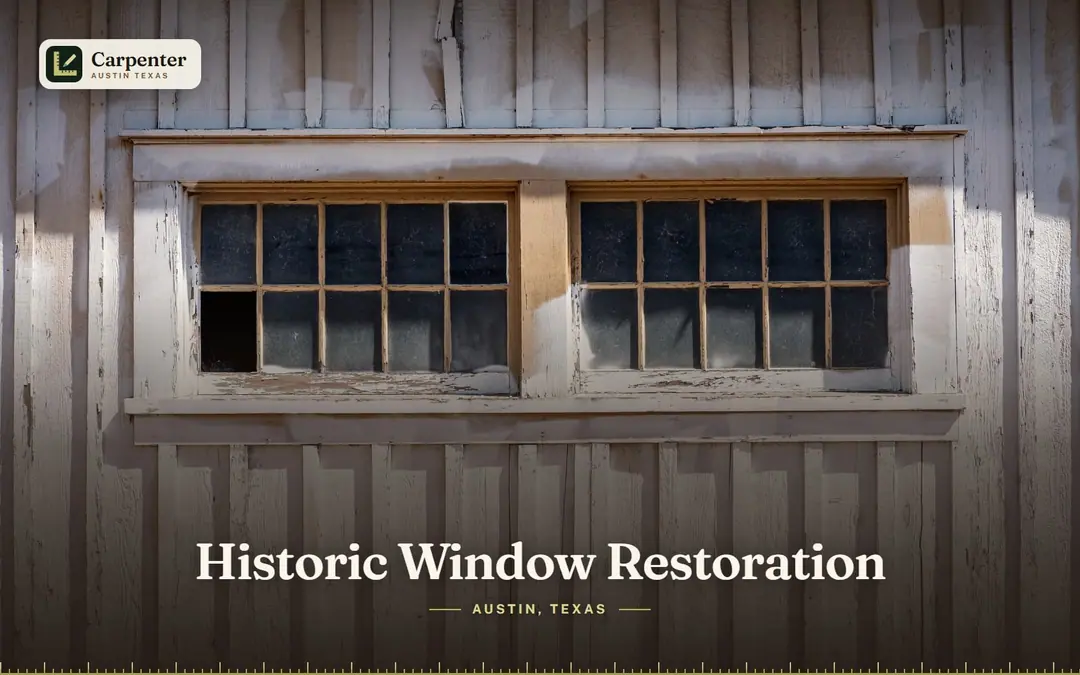
Historic window restoration
Original wood window restoration in Austin: reglazing, sash cords, rot repair, weatherstripping and storms, priced per window. Free written estimates.
See the service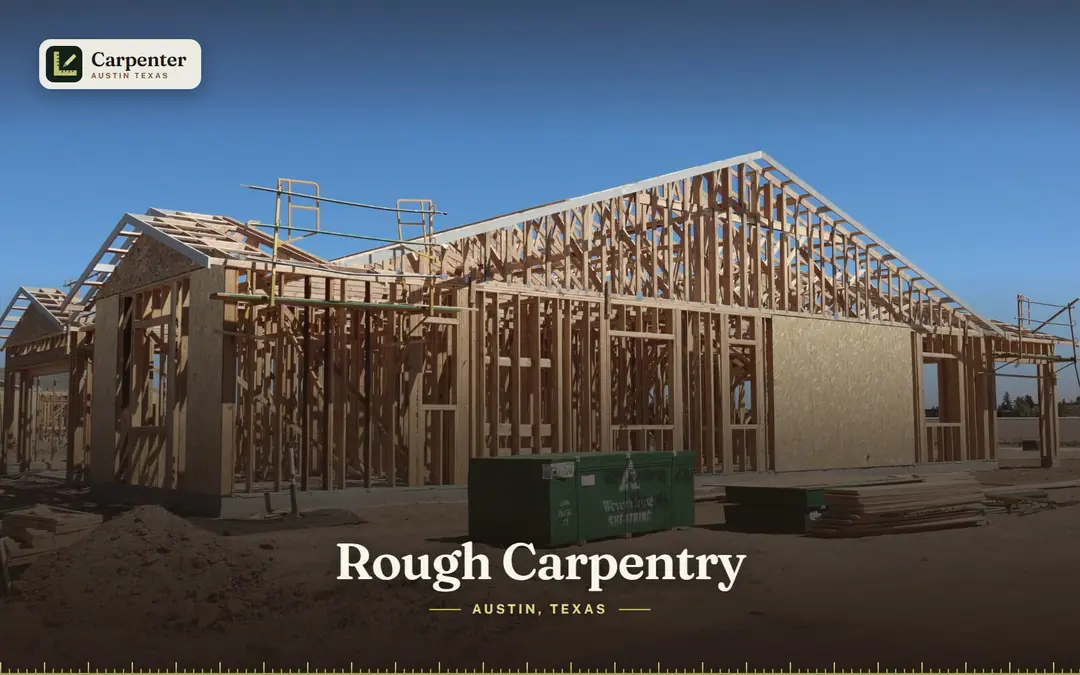
Rough carpentry
Rough carpentry in Austin: wall and roof framing, beams, attic conversions and pier-and-beam repair, built to engineer plans. Free written estimates.
See the service
Carpentry repair
Carpentry repair in Austin for loose trim, rotted posts, stairs, and water, storm or fire damage. Small jobs welcome, with a free written estimate.
See the service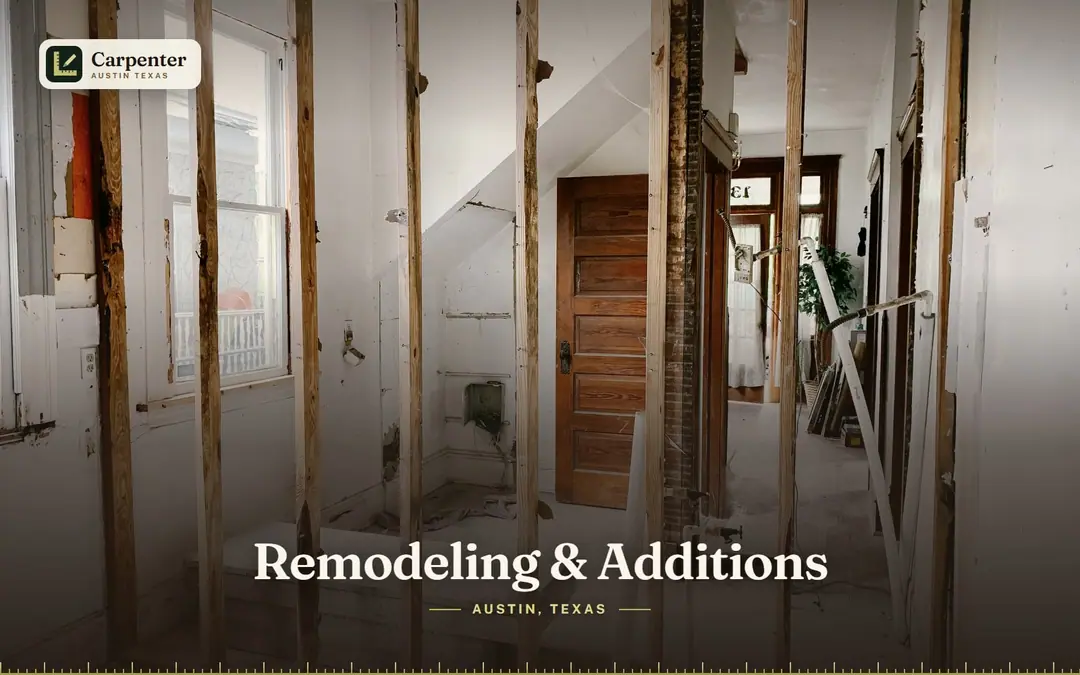
Remodeling & additions
Kitchens, baths, open layouts, garage conversions and aging-in-place work from Austin carpenters who frame and finish it. Free, clear written estimates.
See the service
Commercial carpentry
Commercial carpentry in Austin for tenant finish-outs, office build-outs, retail fixtures, millwork and property repairs. Clear written bids, on time.
See the service


Free written estimate
Call an Austin carpenter today
Keep your home's original character, repaired to last another century. You get a written estimate, we show up on time, and we clean up carefully.
- Homeowners
From a single rotted porch post in a 1920s bungalow to a custom cedar deck overlooking the Hill Country.
- Older Austin homes
Original trim, porches and windows repaired with lumber, fasteners and finishes chosen for Central Texas.
- Businesses and property managers
Tenant improvements, commercial millwork and ongoing repairs for rental homes.